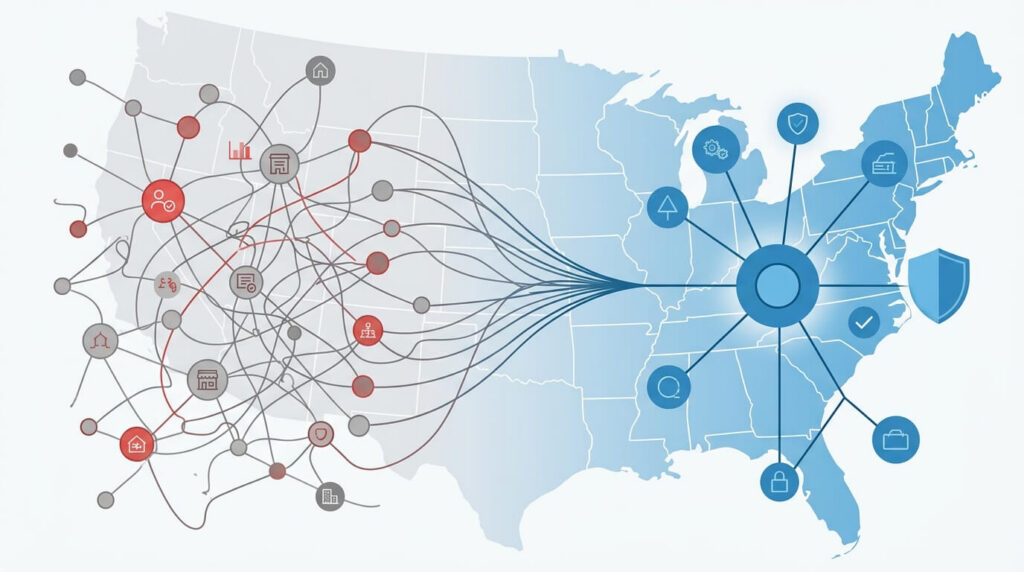

Scaling Home Equity Volume with LOS Integrations Without More Staff
Regional lenders don’t need the technology budget of a national bank to run a fast, efficient home equity operation. What they do need is a closing process that isn’t dragged down by duplicate entry, manual uploads, and a maze of vendor portals.
That’s where loan origination system integration becomes one of the highest-ROI improvements a lender can make. When your LOS connects cleanly to your valuation, title, and closing partners, the workflow itself starts doing more of the work, freeing your team from retyping data, chasing documents, or managing dozens of small handoffs.
Most home equity closing delays can be traced back to the same issues: scattered systems, too many touchpoints, and information that doesn’t move automatically from one step to the next.
Continue reading as we break down how the right LOS integrations help fix those problems, why they matter for regional lenders, and what a more connected closing process looks like in practice.
What role does LOS integration play in home equity closings?
In most home equity operations, the loan origination system is the hub that everything else plugs into. It’s where the file starts, where data lives, and where teams track progress. When that system isn’t connected to valuation, title, or closing partners, the entire workflow becomes a series of manual hops from one platform to another.
That’s where bottlenecks begin.
Without an LOS integration, lenders end up relying on a patchwork process that looks something like this:
- Retype borrower and property data from the LOS into a valuation platform
- Upload or email documents manually to title and closing partners
- Log into multiple vendor portals to check status or pull reports
- Copy details back into the LOS once the product comes in
- Fix errors caused by mismatched data or missed fields
Each step seems small on its own, but multiplied across every loan, the time adds up quickly. So do the mistakes. Manual entry is one of the leading causes of delays, especially when staff are juggling several systems at once.
For regional lenders, these pain points hit even harder. Smaller teams don’t have the extra capacity to absorb inefficiencies. When workflows depend on manual steps, each loan takes more staff time than it should, and that makes it harder to scale when volume spikes.
That’s why integrations with platforms like Encompass, MeridianLink, and Empower matter. When the LOS can talk directly to valuation, title, and closing systems, data flows automatically. Orders go out with a click. Completed products return to the file without anyone hunting for attachments. The LOS becomes a true digital command center instead of a stop-and-start checkpoint.
With the integration doing the heavy lifting, lenders get faster closings, cleaner data, and more time back for their teams.
Why do lenders struggle with duplicate entry and fragmented closing workflows?
Most of the friction in home equity closings isn’t the result of one big problem; it’s the accumulation of small, outdated steps that were never redesigned for modern volume or modern technology. Many lenders are still working inside workflows built years ago, long before digital tools became the norm.
A few common root causes stand out:
- Legacy workflows built around email
Email remains the default method for sending valuation products, title reports, and closing packages. It’s fast, but not structured, and it guarantees duplicate work. - Vendors using incompatible systems
When valuation partners, title companies, and closing agents run on separate platforms, none of them talk to the LOS by default. Staff end up acting as the “bridge” between systems.
These issues lead to the same downstream consequences:
- Slower turn times because every step requires a manual handoff
- Higher error rates, especially in data-heavy steps like valuation and title data entry
- Bottlenecks during volume spikes, when even small inefficiencies are magnified
- More borrower frustration, because delays tend to show up closest to closing day
Across conversations with home equity teams, the same pain points appear again and again:
- Re-keying borrower and property data when ordering valuations or title work
- Manually uploading or emailing documents back to the LOS or other partners
- Checking multiple portals for status updates instead of one central dashboard
- Chasing valuation or title vendors for missing documents or corrections
- Copying details from completed products back into the LOS to finish the file
None of these steps add value; they just consume hours. And when volume increases even slightly, these friction points quickly become operational roadblocks.
How does having a home equity LOS integration improve speed and accuracy?
When a lender’s loan origination system is connected directly to valuation and title partners, the entire closing process changes. Instead of staff retyping data, downloading documents, and switching between portals, information moves automatically between systems. That shift alone removes dozens of small manual steps that slow home equity teams down.
Here’s what improves immediately:
- Data moves automatically
Borrower and property information flows from the LOS to valuation and title systems without anyone re-entering it. - Fewer people touch the file
Ordering, tracking, and receiving documents happen inside one workflow, reducing the number of handoffs. - Documents sync back to the LOS
Completed valuation products, title reports, and signed closing packages return directly to the LOS, no uploading, renaming, or chasing emails. - Staff spend more time reviewing, less time typing
Instead of re-keying or formatting documents, teams can focus on exceptions, quality checks, and getting files moved to closing faster.
The biggest improvements break down into four core benefits:
- Accuracy: Eliminates retyping errors and mismatches between systems
- Speed: Cuts minutes (sometimes hours) from every step of the loan
- Capacity: Allows existing staff to handle more loans without burnout
- Security: Reduces reliance on email, PDFs, and unsecured attachments
By removing these repetitive steps, having an LOS integration clears the bottlenecks that typically show up during busy periods. Workflows become predictable, turn times stabilize, and lenders can scale without scrambling to add headcount, a major advantage for regional teams competing with national lenders.
What are the biggest technology pain points lenders face during closings?
Even lenders with strong home equity programs often run into the same technology frustrations, most of which come from systems that don’t talk to each other. These pain points add friction to every file, especially during busy periods.
Here are the issues that come up most often:
- Unsecured email transmission
Sensitive documents are passed back and forth through inboxes, increasing compliance exposure and slowing down communication. - Vendor portals that require constant logins
Staff must leave the LOS, sign into multiple partner systems, and repeat the process for every task: order entry, document retrieval, status checks, and more. - Teams “waiting” for documents that aren’t pushed automatically
Instead of receiving notifications or auto-delivered files, processors often have to refresh portals or check email repeatedly. - Limited visibility into order status and turn times
Without real-time updates, it’s harder to anticipate bottlenecks, communicate with borrowers, or prioritize files effectively.
Why regional lenders feel these challenges more
Large national lenders can throw people at inefficiencies. Regional lenders can’t, and shouldn’t. Their teams are lean, cross-functional, and already running at full capacity.
Several factors make these pain points hit harder for local and regional institutions:
- Smaller processing teams mean fewer people share a larger workload.
- Limited bandwidth during spikes increases stress and the potential for errors.
- Less in-house IT capacity makes custom workflows unrealistic.
- Greater pressure to use time efficiently because every manual step takes focus away from borrowers and internal priorities.
These constraints are exactly why streamlined, integrated systems offer such a meaningful advantage for home equity lenders looking to compete without increasing staff or budgets.
How do LOS integrations with Encompass, MeridianLink, and Empower reduce handoffs and bottlenecks?
When a loan origination system integrates directly with valuation, title, and closing partners, the entire file moves with fewer stops, fewer clicks, and far fewer opportunities for something to get lost. Instead of juggling separate portals and email threads, everything flows through a single digital mortgage workflow.
Here’s how integrations with platforms like Encompass, MeridianLink, and Empower remove the friction:
- Order placement
Orders can be placed directly from the LOS, no retyping borrower information, no toggling between systems, no chance of a mismatch between platforms. - Status updates
Progress updates sync automatically into the LOS. Processors no longer need to refresh vendor portals or track down information manually. - Document delivery
Completed valuation products, title reports, and closing documents flow back into the LOS instantly, without uploads, downloads, or email attachments. - Internal communication
Everyone — processors, underwriters, closers, management — sees the same data in the same place, reducing back-and-forth and miscommunication.
Why this simplifies the entire workflow
- Fewer touches → fewer errors
- Better visibility → fewer delays
- One centralized system → fewer surprises when files reach closing
A quick example: In a non-integrated workflow, a home equity file might pass through four or five separate handoffs, ordering in one system, tracking in another, retrieving documents from a portal, and emailing them into the LOS.
With integration, those steps collapse into one connected workflow. The file moves cleanly, updates arrive in real time, and teams spend less time babysitting orders and more time closing loans.
This is why regional lenders increasingly treat LOS integration as essential, not optional.
How Does CSS Support Home Equity Lenders with LOS Integration?
While every lender’s technology stack looks a little different, CSS works to make home equity loan processing as connected and low-friction as possible. That starts with meeting lenders where they already are.
We support lenders using major loan origination systems — including platforms like Encompass, MeridianLink, and Empower — and help them connect valuation, title, and closing steps to the systems their teams rely on daily. The level of integration varies by LOS and by lender, but the goal is consistent: reduce manual steps and make it easier for staff to move files through the process.
Here’s what that typically looks like:
- Streamlined ordering: Lenders can place valuation, title, and closing requests without jumping between multiple systems.
- Clear, centralized updates: Status information flows back into the LOS or centralized workflow tools, reducing the need for emails or vendor logins.
- Simplified document and data flow: Instead of chasing attachments across inboxes, completed documents and the associated data return through a predictable, structured process.
- Less lift for internal IT teams: We handle most of the technical setup and coordination, helping regional lenders adopt digital workflows without major development work.
Our philosophy is simple: technology shouldn’t slow lenders down. Integrations and modern workflows should help small and mid-sized lenders move with the speed and clarity of far larger institutions, without needing a large in-house tech budget.
If your team is exploring ways to reduce friction, simplify closings, or prepare for higher home equity volume, we can walk you through what an integrated workflow might look like for you.
What LOS Integration Means for Home Equity Closings Recap
What role does LOS integration play in home equity closings?
It acts as the central hub of the digital loan workflow, connecting valuation, title, and closing activities in one place. When systems talk to each other, lenders eliminate many of the manual steps that typically slow files down.
Why do lenders struggle with duplicate entry and fragmented workflows?
Most challenges stem from legacy email-based processes, vendor systems that don’t align, and staff relying on manual retyping. These gaps create unnecessary handoffs, rework, and delays, especially during busier cycles.
How does having a home equity LOS integration improve speed and accuracy?
Integrated systems move data automatically, reduce the number of people touching each file, and keep key documents flowing back into the LOS. The result is fewer errors, faster turn times, and more capacity for teams without adding staff.
What are the biggest technology pain points lenders face during closings?
Lenders often cite unsecured email exchanges, multiple vendor portals, slow document retrieval, and limited visibility into status updates. These issues compound quickly for smaller teams that can’t absorb extra work or bottlenecks.
How do integrations with systems like Encompass, MeridianLink, and Empower reduce bottlenecks?
They eliminate retyping, auto-sync status updates, and streamline document delivery, allowing everyone to work from the same source of truth. With fewer handoffs and clearer visibility, lenders experience fewer delays and more predictable closings.
How does CSS support lenders through LOS-integrated home equity loan processing?
CSS helps lenders connect valuation, title, and closing steps to their existing systems, regardless of LOS complexity. The focus is on reducing friction, supporting staff workflows, and helping lenders move faster without increasing their technology burden.
Setting Up Your Team for What’s Next
For regional lenders, staying competitive in home equity lending isn’t about building a massive technology stack or hiring endlessly. The real advantage comes from simplifying the digital mortgage workflow so that your existing team can move faster, make fewer mistakes, and spend more time on meaningful work.
LOS integration isn’t a future-state idea; it’s quickly becoming the standard for efficient, predictable, and compliant home equity lending. The lenders who adopt connected workflows now will be the ones best positioned to scale when volume returns.
If you’d like to take a closer look at your current process or identify where integrations could make the biggest impact, CSS is always available to talk through options and share what we’re seeing across the market.

Ashley is the CEO of CSS and oversees all aspects of the company’s strategy and operations.