
How Regional Lenders Can Win the Refinance Market in 2026
The refinance market in 2026 is shaping up to be steadier, not explosive. Rates are expected to move in fits and starts, creating short windows of opportunity rather than prolonged waves. Borrowers are watching closely and acting quickly when conditions make sense, which puts pressure on lenders to respond without overextending their teams.
For regional lenders, that reality changes the playbook. Competing in this environment isn’t about matching national banks on volume or marketing reach. It’s about having a refinance strategy built for speed, consistency, and borrower confidence when the moment arrives.
In the refinance market of 2026, the lenders who will succeed will be the ones with efficient workflows, trusted borrower relationships, and the ability to execute when rates shift. That’s where regional lenders tend to shine, if their operations are ready for it.
What Will the Refinance Market Look Like in 2026 for Regional Lenders?
In practice, the refinance market in 2026 is less about predicting volume and more about being ready for sudden spikes. Rate dips may only last days or weeks, and borrowers who refinance during those windows are typically prepared to move immediately. That means lenders don’t just need competitive pricing; they need refinance operations that can absorb short bursts of activity without slowing down.
This is where refinance operations efficiency becomes a deciding factor. Manual handoffs, rekeying data, or fragmented vendor workflows quickly turn into missed opportunities when volume arrives all at once. Lenders that rely on clean processes, integrated systems, and predictable closing timelines are better positioned to capitalize without scrambling.
For regional lenders, a refinance strategy built around efficiency allows smaller teams to move quickly, handle volume responsibly, and protect both borrower experience and internal capacity, even when market conditions shift with little notice.
How do Borrower Expectations Differ in a Refinance?
A refinance is a very different experience for borrowers than a purchase or even a home equity loan. The emotional stakes are lower, but expectations around speed and simplicity are much higher.
Most borrowers come into a refinance with a clear mindset: this should be easier than the original loan.
Key differences in the borrower experience in refinances include:
Less emotion, more math
Refinances are driven by numbers, not life events. Borrowers are focused on rates, savings, and timelines, not inspections or moving plans.Higher sensitivity to speed
When borrowers refinance, they often want to lock in a rate quickly. Delays feel less tolerable because the transaction is perceived as “administrative,” not complex.Lower tolerance for friction
Repeating paperwork, unclear status updates, or back-and-forth emails stand out more in a refinance borrower experience. What might be acceptable in a purchase can feel unnecessary here.Expectation of familiarity
Many refinance borrowers are returning customers. They already know the lender, which raises the bar for efficiency and consistency.
A strong refinance borrower experience isn’t about hand-holding; it’s about removing obstacles, minimizing touchpoints, and keeping the process moving smoothly from application through closing.
What Challenges do Regional Lenders Face in Scaling Their Refi Operations?
Refinance volume creates pressure in very specific places, especially for lenders running lean teams. The challenge usually isn’t competition. It’s how quickly small inefficiencies show up when refinance demand arrives all at once.
Here’s where things tend to get tight:
- Limited room for extra steps
Refinance waves don’t build slowly. They come in bursts. When teams are already operating efficiently, even a little rework or delay in title, closing, or review can back up the pipeline. - Manual work that doesn’t scale well
Re-keying data, chasing status updates, and relying on email to move files forward might be manageable at lower volumes. During refi spikes, those same steps become bottlenecks. - Inconsistent processes across loans or markets
When refinance workflows vary by product, vendor, or location, teams spend more time managing exceptions than closing loans. That inconsistency makes it harder to absorb volume without slowing things down. - Compliance pressure during busy cycles
As refinance activity increases, so does scrutiny. Without clear workflows and ownership, documentation gaps and review delays become more likely.
Where this turns into an advantage is execution.
When refinance workflows are streamlined, vendor coordination is centralized, and handoffs are reduced, those constraints ease up. Files move more predictably. Exceptions surface sooner. Borrowers experience fewer delays.
The issue isn’t scaling refinance volume. It’s whether operations are built to flex when opportunity shows up. Lenders who focus on clarity, consistency, and efficiency ahead of time are far better positioned when refinance demand returns.
How can Regional Lenders Compete on Refinance Volume?
For regional lenders, competing on refinance volume is about getting more value out of the relationships you already have and building an operation that can move quickly when opportunity develops.
The most effective lever is recapture, not acquisition.
- Existing borrowers are the highest-value audience.
You already know their loan terms, property, and payment history. When rates dip, these borrowers are far more likely to refinance with a lender they trust, as long as the process feels easy and timely. - Cycle time drives capacity.
Shorter refinance timelines mean teams can close more loans without adding staff. When files move smoothly through title, closing, and post-closing, volume increases naturally. This is one of the most overlooked refinance cost savings strategies for regional lenders. - Centralized workflows create consistency.
Centralized refinance operations reduce variation across markets, vendors, and loan officers. With fewer handoffs and clearer ownership, lenders spend less time managing exceptions and more time closing loans.
When refinance volume arrives in waves, the lenders who win are the ones ready to absorb it without scrambling. By focusing on recapture, tightening workflows, and centralizing operations, regional lenders can grow refinance volume in a controlled, sustainable way.
How Does CSS Help Simplify the Refinance Title and Closing Process?
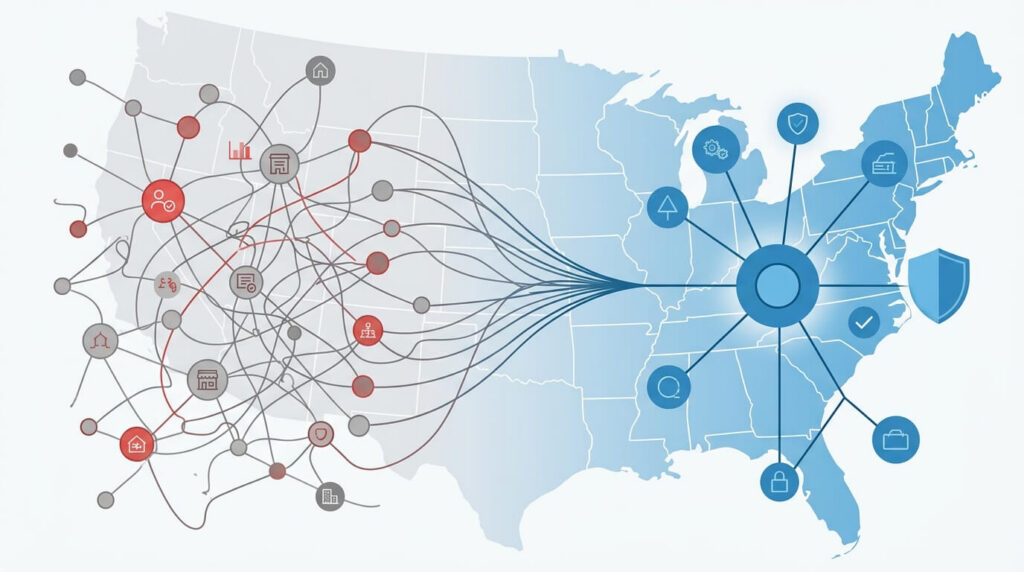
Refinance efficiency doesn’t come from adding another platform. It comes from reducing handoffs and giving teams a clear, predictable way to move files from approval to funding. That’s where CSS operates: not as a tool, but as a workflow partner embedded in the refinance title and closing process.
CSS helps regional lenders simplify refinances by:
- Centralizing coordination
Title, recording, and closing activities are managed through a single, connected process instead of multiple local vendors. Lenders know where every file stands without chasing updates. - Standardizing processes across states
Even when loans span multiple jurisdictions, workflows stay consistent. State-specific requirements are handled within the process, not pushed back onto internal teams. - Reducing handoffs and rework
Fewer parties touch the file, which lowers the risk of miscommunication, document errors, and last-minute surprises that delay funding.
For lenders managing fluctuating refinance volume, this approach supports centralized refinance operations that scale up or down without adding staff. The result is a refinance closing experience that feels controlled, repeatable, and easier for both internal teams and borrowers, especially when timing matters most.
Why do Borrower Trust and Local Relationships Matter More in Refinancing?
Refinancing is a decision borrowers make quickly and deliberately. When the numbers work, most borrowers don’t want to shop around; they want to move forward with a lender they already trust.
That’s where regional banks’ refinance advantages become clear.
Borrowers tend to refinance with lenders who offer:
- Clear communication
Straight answers on rates, timelines, and next steps reduce hesitation and keep borrowers engaged once they decide to move. - Predictable timelines
Refinance borrowers expect the process to be faster than their original loan. Consistency in title, closing, and documentation builds confidence that the loan will close without delays. - Fewer surprises at closing
Unexpected fees, last-minute document requests, or rescheduled closings quickly erode trust. A clean, well-managed process protects the borrower relationship.
In refinancing, trust isn’t just about relationships; it’s reinforced by execution. A smooth, consistent operation directly shapes the borrower experience in refinances, often more than pricing alone.
Regional lenders who align their workflows behind clear communication and reliable timelines are better positioned to keep refinance business in-house when it matters most.
How Does Technology Help Regional Lenders Close Refinances Faster?
Technology doesn’t speed up refinances by adding bells and whistles. It helps by quietly removing the friction that slows teams down day after day. For regional lenders with lean operations, that’s where refinance technology solutions deliver the biggest impact.
The most effective tools focus on eliminating unnecessary work:
- eClosings
Reduce scheduling delays, cut down on missing signatures, and shorten the gap between approval and funding. When documents move electronically, files don’t stall waiting on paper. - Remote Online Notarization (RON)
Gives borrowers flexibility and helps closings happen on time, even when schedules or locations don’t line up. This keeps refinance timelines predictable without extra coordination. - LOS integrations
Connect valuation, title, and closing steps directly to the loan system. Orders, status updates, and documents flow automatically, instead of being re-keyed or tracked through emails.
What these tools really remove is friction:
- No re-entering the same data across systems
- Less vendor chasing for updates or documents
- Fewer unsecured, email-driven workflows that create errors and delays
When manual steps disappear, refinance operations efficiency improves naturally. Files move faster, staff capacity stretches further, and borrowers experience a refinance process that feels simpler and more predictable, exactly what they expect when rates shift and timing matters.
Regional Lenders Refinancing Recap
What does the refinance market look like in 2026 for regional lenders?
The refinance market in 2026 is expected to be steady but uneven, with short bursts of activity driven by rate dips rather than sustained waves. This environment rewards lenders that can move quickly and efficiently without adding headcount.
How do borrower expectations differ in a refinance compared to a purchase?
Refinance borrowers are typically less emotional and more focused on speed, cost, and predictability. They expect the process to be easier than their original loan and have little tolerance for delays, rework, or surprises.
How can regional lenders compete on refinance volume?
The most effective strategy is recapture, not acquisition. By focusing on existing borrowers and improving cycle times, regional lenders can increase refinance volume through operational efficiency rather than increased staffing.
Why do borrower trust and local relationships matter more in refinancing?
Borrowers are more likely to refinance with lenders they already trust. Clear communication, predictable timelines, and consistent closing experiences reinforce that trust and reduce the likelihood that borrowers shop elsewhere.
How does technology help regional lenders close refinances faster?
Practical technology like eClosings, RON, and LOS integrations removes friction from the process. These tools eliminate re-keying, reduce vendor follow-ups, and replace email-driven workflows with more reliable, system-based coordination.
How does CSS help simplify refinance title and closing?
CSS supports regional lenders by centralizing refinance title and closing operations into a consistent, coordinated workflow. This reduces handoffs, manages state-specific requirements, and helps lenders scale refinance volume without adding operational complexity.
What is the core takeaway for regional lenders entering 2026?
Winning in refinancing isn’t about matching national lenders on size or spend. It’s about execution—efficient workflows, trusted borrower relationships, and operational consistency that allows lenders to act quickly when opportunities arise.
Refinance Success Will Come From Leaning Into Your Strengths
Refinancing in 2026 will require regional lenders to have operations that can move quickly, communicate clearly, and deliver a predictable experience when borrowers decide it’s time to refinance. The lenders who win will be the ones who lean into what they already do well: trusted borrower relationships, efficient internal workflows, and title and closing processes that don’t slow the file down. When those pieces are aligned, regional teams can handle refinance volume without adding unnecessary complexity or headcount. CSS helps lenders build refinance operations that scale smoothly as volume returns, with workflows designed to support speed, consistency, and compliance across markets. If you want to pressure-test your refinance workflows before volume returns, CSS can help you think through where alignment and simplification will make the biggest difference.
Ashley is the CEO of CSS and oversees all aspects of the company’s strategy and operations.