Balancing Efficiency and Protection in Home Equity Lending
Home equity lending has become increasingly operational over the past few years.
Lenders are constantly balancing speed, borrower experience, cost control, and risk management, often all within the same workflow. As home equity programs continue to evolve, many institutions are taking a closer look at how they maintain efficient processes while still protecting themselves from unnecessary operational exposure.
This month, we’re looking at where that balance is becoming more important, particularly within title and property-report workflows, and why many lenders are rethinking how they approach vendor oversight and operational protection.
Why Property Reports Became So Common in Home Equity Lending
Property reports have become a common workflow solution in place of full title insurance for many home equity lenders.
In second-lien lending, lenders already understand that another mortgage is typically in first position. The operational goal is often to confirm ownership, identify existing liens, review taxes, and establish the property’s current status without introducing the additional cost and process complexity that can come with a full title insurance product.
Property reports became attractive because they help support:
- Faster operational workflows
- Lower borrower costs
- Simplified processing for second-lien lending
- More streamlined home equity experiences
As home equity volume has grown, many institutions have refined these workflows around speed, simplicity, and operational consistency.
Where the Operational Exposure Exists
At the same time, streamlined workflows still require thoughtful risk management.
Property reports are not title insurance. If a lien is missed or a position is incorrectly identified, the lender may have limited remedies available depending on the situation. In many cases, lender remedies may be limited to the cost of the report itself.
These situations are not common, but they illustrate an important operational reality: efficient workflows still need safeguards behind them.
Areas lenders continue evaluating include:
- Lien position accuracy
- Vendor quality control
- Operational accountability
- Downstream exposure from reporting errors
- Balancing efficiency with appropriate protection
The challenge for many institutions is finding the right middle ground, maintaining efficiency without introducing unnecessary exposure or significantly increasing costs.
Why More Lenders Are Adding Warranty Coverage
One approach that has gained traction is adding warranty coverage alongside property reports.
Rather than moving all the way to full title insurance, many lenders are looking for practical ways to add another layer of protection while preserving the operational advantages of streamlined home equity workflows.
Warranty coverage helps address that gap by providing additional protection if an error within the property report creates damages for the lender.
For many lenders, the appeal comes down to balancing:
- Operational efficiency
- Borrower experience
- Cost management
- Additional protection against reporting errors
In many cases, that additional coverage can be added at a relatively low incremental cost compared to the broader expense of title insurance.
As home equity programs develop, many institutions are reevaluating where that balance should sit.
The broader conversation around operational protection is also influencing how lenders think about vendor relationships themselves.
As workflows become more streamlined, operational consistency increasingly depends not just on internal processes, but on how effectively outside partners are coordinated, monitored, and managed across the lending process.
The Operational Challenge of Vendor Fragmentation
Operational consistency has become a larger conversation around vendor management itself.
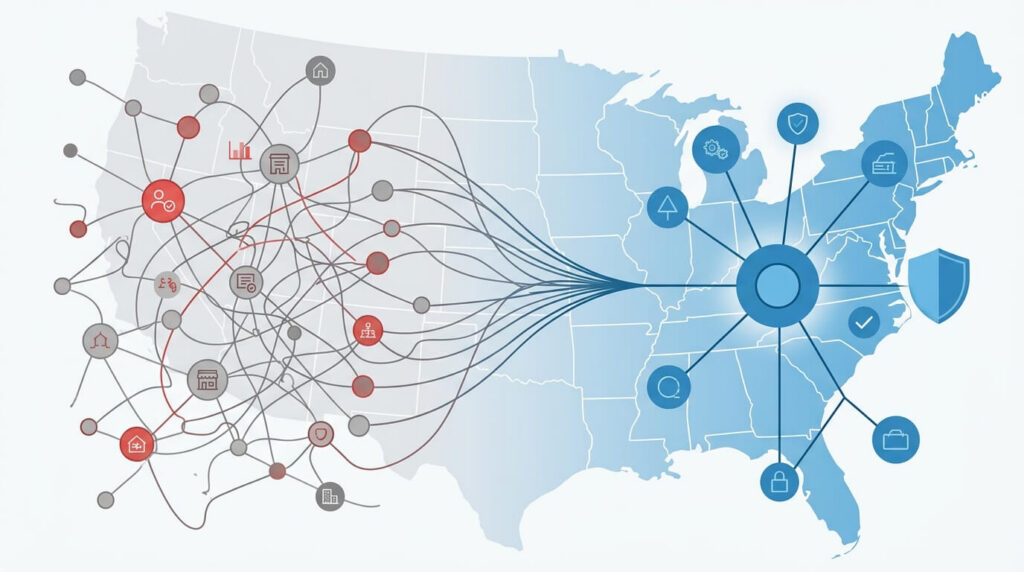
As regional lenders expand across multiple markets, title and settlement workflows can gradually become fragmented over time. Different local providers may operate with different timelines, communication standards, fee structures, security practices, and escalation processes.
Individually, those differences may seem manageable. Collectively, they can create operational friction that becomes harder to control at scale.
Common challenges include:
- Inconsistent communication workflows
- Varying turnaround expectations
- Different security and fraud-prevention standards
- Fragmented escalation processes
- Increased oversight burden across large vendor networks
That’s one reason many lenders are reassessing how they structure vendor relationships. The conversation is shifting away from simply maintaining large networks of providers and toward building more consistent, accountable operational frameworks around a smaller group of trusted partners.
For lending teams, the goal is often less about reducing local expertise and more about improving predictability, oversight, and coordination across the lending process.
Looking Ahead
Operational efficiency in lending is no longer just about moving files faster. Increasingly, it’s about building workflows that remain predictable, coordinated, and well-managed as volume, markets, and borrower expectations further shift.
Whether lenders are evaluating property-report workflows, vendor relationships, or broader operational processes, the focus is becoming more strategic:
- Reducing unnecessary friction
- Improving operational consistency
- Strengthening oversight
- Maintaining the right level of protection without slowing workflows
If you’re taking a closer look at how these operational decisions are evolving within your organization, we’re always glad to share what we’re seeing across the market.
Evaluating your home equity workflows? CSS works with regional lenders to streamline property report processes, add warranty protection, and simplify vendor relationships across multiple states. Talk to Our Team

Ashley is the CEO of CSS and oversees all aspects of the company’s strategy and operations.